
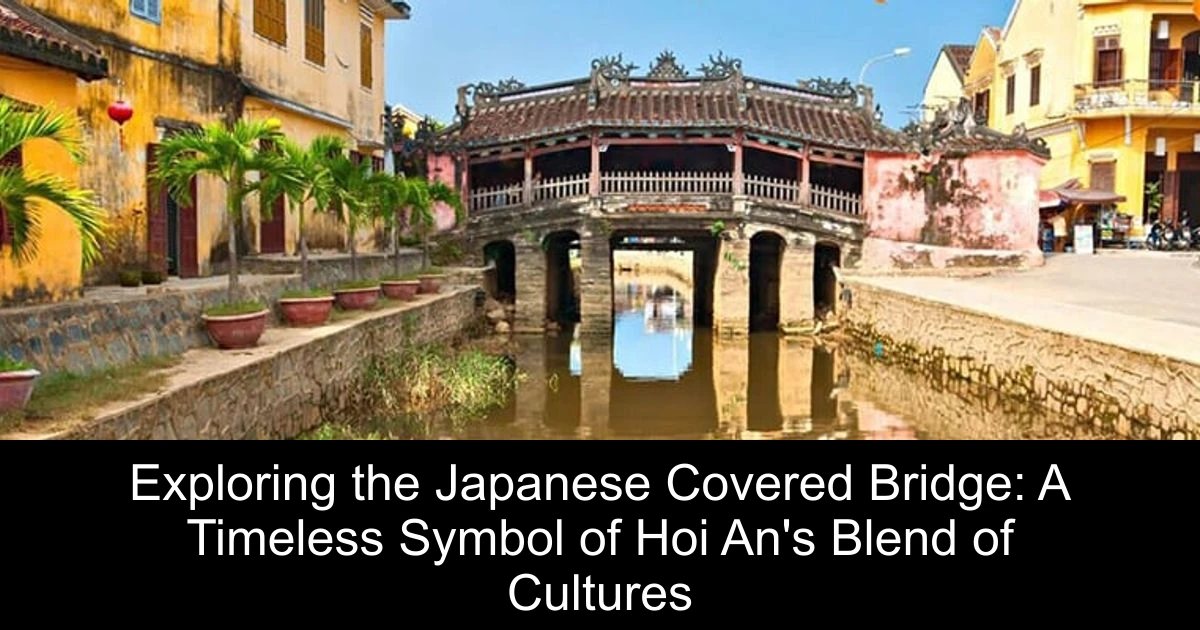
The Japanese Covered Bridge, or Cau Pagoda, is a must-see landmark in Hoi An, Vietnam, a city steeped in rich history and culture. Travelers often find themselves seeking a deeper understanding of the unique architectural and cultural treasures that this ancient town offers. This iconic bridge, constructed in the 17th century by Japanese merchants, stands as a testament to the harmonious blend of Vietnamese, Chinese, and Japanese influences. Visiting the bridge not only enhances your travel experience but also provides a glimpse into Hoi An's past. Don’t miss the chance to stroll across this captivating structure and explore the stories it holds.
I. History of the Japanese Covered Bridge
The allure of the Japanese Covered Bridge lies in its fascinating history that dates back over 400 years. Erected by Japanese traders in the early 1600s, this architectural marvel has been a silent witness to the ebb and flow of time. While the precise dates of its construction remain elusive, historical texts pinpoint significant moments in its timeline, marking its importance in Hoi An's development. From tales of mystical monsters to the bridge's economic significance, this site embodies an extraordinary narrative that appeals to inquisitive travelers.
The bridge was believed to have played a role in cultural beliefs, with local folklore suggesting it served as a magical sword against the monstrous Namazu. To enhance its protective power, a temple connected to the northern end of the bridge was established in 1653, symbolizing the merging of religious practices among the Vietnamese and Chinese communities. Today, visitors can appreciate both the bridge and the accompanying temple, which together enrich the cultural experience in Hoi An.
As international trade flourished in Hoi An, the bridge stood as a vital link among Japanese, Chinese, and Vietnamese communities. Its construction marked a period of cooperation and cultural exchange, making it a significant milestone in the city’s history. The bridge was recognized as a National Historic-Cultural Monument in 1990, reaffirming its status as a preserved relic that continues to attract visitors from around the globe.
II. The Renovation of the Japanese Covered Bridge
Throughout its long history, the Japanese Covered Bridge has undergone several restorations, ensuring its beauty and structural integrity. The earliest recorded repair took place in 1763, initiated by local leaders, setting a precedent for future maintenance efforts. Over the years, various renovations have addressed wear and tear, preserving the bridge's unique architecture and historical significance.
Subsequent renovations in 1815, 1875, and during the French colonial era expanded on these restoration efforts, with local communities coming together to fund and facilitate repairs. Notably, the 1915 restoration by French officials emphasized the bridge's importance, legitimizing it as a national treasure. The most recent major renovations took place in 1986 and 1996, aimed at structural reinforcement and aesthetic enhancement, showcasing both traditional craftsmanship and modern preservation techniques.
As Hoi An continues to develop as a popular tourist destination, the local government remains committed to maintaining the Japanese Covered Bridge as a historical landmark. Restoration efforts are not only a testament to the bridge's architectural legacy but also underscore the cultural values shared among residents of Hoi An and beyond.
III. Why is the Japanese Covered Bridge So Special?
The Japanese Covered Bridge stands out for its multicultural roots, embodying a harmonious blend of Vietnamese, Japanese, and Chinese influences. The construction of this bridge symbolizes the collaboration among different ethnic groups who sought refuge and opportunity in Hoi An, fostering a unique spirit of coexistence. It has become a cultural icon, representing the rich traditions of the region and serving as a bridge—not just of wood, but of ideals among diverse communities.
The bridge integrates two distinct parts: the bridge itself and the accompanying temple, which was built approximately 60 years later. This duality reflects the bridge's purpose both as a passageway and as a spiritual guardian, reinforcing its significance in the local community. Visitors are encouraged to explore both spaces to fully appreciate the cultural narratives woven into their architecture.
Unlike many temples in Vietnam dedicated to Buddha, the Japanese Covered Bridge is dedicated to Bac De Tran Vo, a deity believed to bestow happiness, wealth, and health. This unique dedication highlights the bridge's role as a spiritual refuge in addition to its historical importance. Its design, intricate carvings, and visual appeal showcase a fascinating fusion of artistry that captivates all who cross its threshold.
Conclusion
The Japanese Covered Bridge remains a quintessential part of Hoi An’s charm, thriving as a dynamic symbol of history, culture, and community. From its enchanting architecture to the rich stories it tells, a visit to this iconic landmark is essential for anyone exploring Hoi An. As you walk across the bridge, take a moment to reflect on the many lives it has touched and the cultural exchanges that have flourished here over centuries. The Japanese Covered Bridge promises not just a beautiful sight, but an unforgettable journey into Vietnam’s vibrant history.