
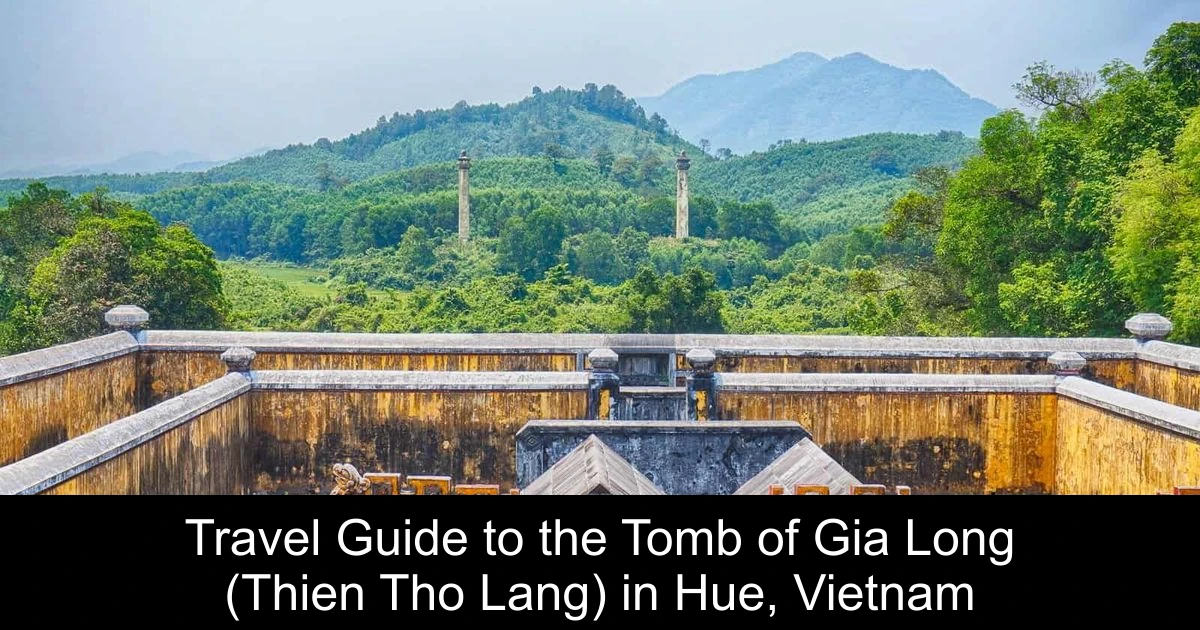
Visiting the Tomb of Gia Long in Hue is an essential experience for any traveler seeking to understand Vietnam's rich history and the Nguyen Dynasty's legacy. This royal tomb is not just a resting place; it encapsulates the life and reign of Vietnam's first emperor of the last feudal dynasty. Here, you can explore the serene yet grand architecture that offers a window into the past. Whether you're an architecture enthusiast or a history buff, Gia Long’s Tomb promises to captivate and inspire with its natural beauty and historical significance. Ready to uncover the stories hidden within this magnificent site? Let's embark on this journey through time!
I. History of the Tomb of Gia Long
King Gia Long, born Nguyen Anh, was a pivotal figure in Vietnam's history, known for establishing the Nguyen Dynasty after overcoming the Tay Son Dynasty in 1802. This historical victory earned him the distinction of being the first king of the Nguyen Dynasty, and he designated Hue as the capital of his realm. Despite his controversial policies, Gia Long's reunion of Vietnam marked a significant turning point in the country's narrative, and it was during his reign that Vietnam was officially named for the first time. Following his death in 1820 at the age of 58, he was interred in the very tomb he had built for his beloved first wife.
The construction of the Tomb of Gia Long began in the aftermath of his wife’s passing in 1814, showcasing Gia Long's deep respect and love for her. Remarkably, he decided to also rest beside her in this sacred place after his own passing. The site's selection was based on the advice of local mandarins, who believed the area's energy would endure for eons, leading to its designation as Thien Tho Son. The tomb’s construction faced numerous challenges, including an accident that left King Gia Long injured but demonstrated his compassion as he chose not to punish those responsible, instead providing them with aid.
II. Highlights of the Tomb of Gia Long
The Tomb of Gia Long is nestled within a vast royal enclosure covering over 11,000 meters, home to 42 hills that create a natural fortress around the site. The tomb sits harmoniously on a flat hillside, framed by the majestic Dai Thien Tho mountain in front, with seven other mounts in the distance and 14 on either side, forming a protective circular boundary. A picturesque pathway, shaded by pine trees, leads visitors from the banks of the Huong River (Perfume River) right up to the entrance of the tomb, enhancing the tranquil atmosphere.
This tomb represents the simplest form of tomb architecture among the Nguyen kings, yet it is essential in setting the precedent for those that followed. It comprises three significant areas: the worshiping zone, the tomb area, and Bi Dinh. While it lacks the elaborate lakes found in other royal tombs, a solitary large lake graces the front, offering a harmonious blend of yin-yang symbolism and complementing the natural beauty of the surroundings. The Minh Thanh Temple, dedicated to the memory of King Gia Long and his first queen, sits proudly within the worshiping area.
III. What to See and Do at the Tomb of Gia Long?
One of the first stops within the tomb complex is Minh Thanh Temple, which translates to ‘the impressive achievement’—a nod to King Gia Long's successful establishment of the Nguyen Dynasty. Despite its simple architecture, the temple exudes a sense of solemn dignity. The intricately designed roof features double slopes, and the aged yellow walls give it an air of reverence that perfectly suits its historical significance. Visitors ascend a beautifully crafted staircase, flanked by dragon-shaped banisters that symbolize royal power, to reach the temple's entrance.
At the forefront of the tomb area, you will find Buu Thanh, the circular wall that encases the final resting place of King Gia Long. Unlike other tombs that are buried deep within forests, Buu Thanh is easily accessible, ensuring its deep connection with nature is still prominent. There’s a bronze door that opens only a handful of times each year, and the space in front is adorned with a staircase leading down to a courtyard where stone statues of mandarin officials and animals stand guard, exuding a sense of being preserved in time.
Bi Dinh is another compelling structure, appearing notably newer compared to the other components of the tomb due to recent restoration efforts. Set amidst a serene pine forest, its striking yellow walls and red-tiled roofs make it a distinctive feature. This building houses a stele inscribed with an epitaph by King Minh Mang, who revered King Gia Long's contributions to the dynasty and Vietnamese history. The artistry on the stele, depicting meticulously carved patterns, showcases the intricate craftsmanship of the time.
IV. How to Get to the Tomb of Gia Long?
The Tomb of Gia Long is conveniently located approximately 20 kilometers south of Hue's Imperial City, making it easily accessible for travelers. Whether you choose to ride a motorbike, drive a car, or take a scenic boat journey, each option presents a unique way to experience the Vietnamese landscape. If you’re driving, follow Highway 49 to Huong Tra District and continue for an additional 6 kilometers after crossing Huu Trach Bridge, making for a brisk 25-minute trip.
For those who enjoy a leisurely pace, consider traveling by boat. Departing from the center of Hue near the Imperial City, you can glide along the Huong River, delighting in the serene vistas and traditional villages that line the banks. Although this journey may take longer, the enchanting sights will make for a memorable excursion, enriching your experience of Hue.
V. Extra Tips
To make the most of your visit to the Tomb of Gia Long, plan your trip during the spring months of January to February—the weather is at its most pleasant for exploring outdoor attractions. Remember to dress respectfully, as this is a significant cultural site. While visiting this royal tomb, feel free to explore the nearby tombs of other royal family members, such as the tomb of Queen Thuan Thien, the mother of King Minh Mang.
Photography is allowed only in designated areas, so make sure to check for signs before snapping pictures. Although the atmosphere at Gia Long's Tomb may seem less populated than others such as those of Minh Mang, Tu Duc, or Khai Dinh, its serene charm makes it a perfect escape. Here, you can revel in nature's beauty and the architectural essence of a royal tomb, far removed from the bustle of modern life.
Conclusion
The Tomb of Gia Long is more than just a burial site; it’s a tranquil retreat that tells the story of Vietnam’s imperial past through its harmonious blend of nature and history. As you meander through this magnificent complex, you'll find a sense of peace enveloping you, accompanied by the echoes of tales from the Nguyen Dynasty. For travelers seeking both beauty and history, this tomb is a must-visit. Delve into the serenity of Gia Long’s final resting place and leave with a deeper appreciation for Vietnam's rich cultural heritage.